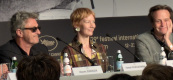
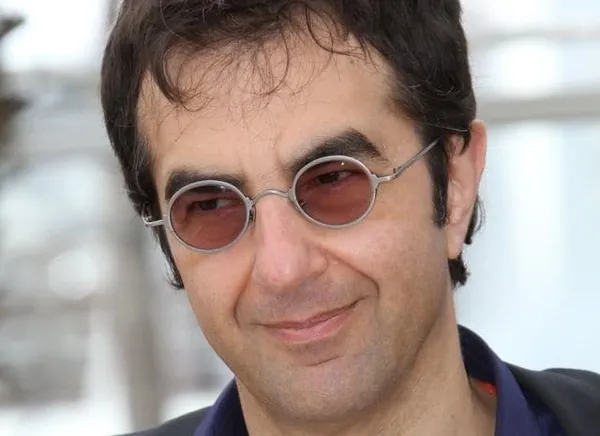
Atom Egoyan: "The relationship between parents or parent figures is something that has really marked a lot of the work that I've done.”
Like most worthwhile ideas, Atom Egoyan’s springboard for his sixth film in the Cannes Competition, The Captive (a psychological thriller about child abduction) came from personal experience.
“The original spark was that I am from a town on the west coast of Canada where there is a well known case of a boy going missing from a park, when his mother had turned her back for a few minutes.
“The posters are still there and I see them every time I go back home. That story is at the basis of The Captive. I have been trying different approaches and what connected was the story of the three couples.”
Most of the men in the film from the father to the police investigator to the abductor are on guilt trips, he suggests. “They all make big mistakes – the father by leaving the child alone – and they all have to live with the consequences of that.”
The film gives a prime place to surveillance culture in its depiction of the unfolding events. “There are those watching the suffering of those people left behind. It did not seem so outlandish, because in the world we live in we are watched all the time,” he explained.
Egoyan admitted being drawn to the dark side of human nature. “I think this attraction to the dark side of human behaviour comes from the idea of the responsibilities people have and what happens when they don't take these responsibilities seriously. It's something that I have observed a lot in my upbringing and, certainly, the relationship between parents or parent figures is something that has really marked a lot of the work that I've done.”
Another influencing factor in his films comes from his background as “an outsider.” He explains: “I was an Armenian raised on the west coast of Canada. We were the only Armenians in a very conservative sort of town. So, I was always aware of being outside of it. English wasn't my first language and I remember what it meant to actually take on this culture and learn it, but always being aware of the construction of it and what a culture meant. All of those things I find very fascinating. When does somebody have entry into a culture? When do you get that passport? When do you actually allow yourself to be called a person from this place?
More than two decades ago Egoyan’s feature, Speaking Parts, was selected in the Cannes Director’s Fortnight competition, followed by The Adjuster, two years later.
Egoyan is no great fan of the way the cinema business is developing. “Everything is so much more convenient but I don’t think cinema should be convenient. It should involve a kind of pilgrimage to a place, where you make a contract to immerse yourself in an experience, to be captive for those two hours.”
He rated the experience of showing films in the Grand Lumière Theatre before an audience that is passionately interested and knowledgeable about cinema as “the pinnacle.”
Egoyan served as one of the festival’s jurors in 1996, when fellow Canadian David Cronenberg had his first film Crash in the competition. Cronenberg returns this year with Maps to the Stars, his fifth film in the Cannes competition while the youthful Xavier Dolan is the third Canadian present with Mommy.
 Facebook
 Reddit