Ferzan Özpetek on the all-encompassing art of cinema, and Diamanti
by Casper Borges
Diamanti
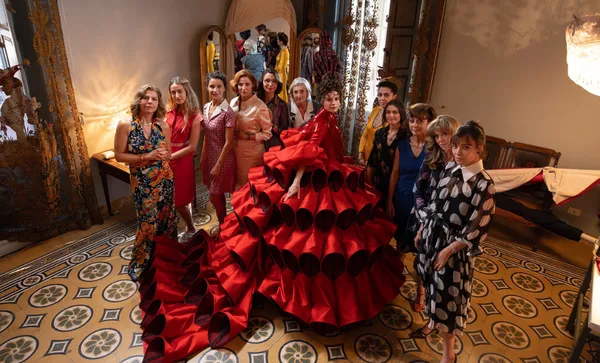
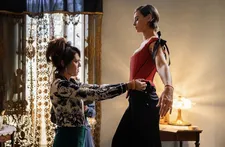
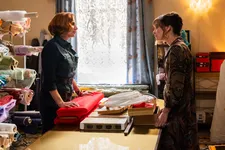
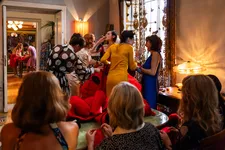
Set in 1970s Rome, Turkish-Italian director Ferzan Özpetek’s Diamanti is a celebration of women’s contribution to cinema. The film’s narrative centres on a prestigious fashion house, led by dressmaker sisters Alberta (Luisa Ranieri) and Gabriella (Jasmine Trinca), who receive a commission from an Oscar-winning costume designer for an 18th century production. With some comedy, the story leans more into the drama between the seamstresses as they undertake their work.
Özpetek’s 1997 feature début, the romance drama Steam: The Turkish Bath (Hamam), followed a man renovating a property inherited after the death of his aunt. He has since directed the comedy drama Loose Cannons (Mine Vaganti), the mystery drama Naples In Veils (Napoli Velata), amongst other features and shorts, as well as publishing a novel and directing opera productions.
Diamanti
Ahead of Diamanti’s UK theatrical release, Özpetek spoke with Eye For Film about cinema feeling a natural fit, and the death and resurrection of words.
Casper Borges: What drives you creatively?
Ferzan Özpetek: I’ve been a painter, and I’ve written four books that made the bestsellers list in Italy. I’ve also done a lot of theatre, and everything I’ve done has been met with approval. But cinema is perhaps what comes more naturally. Underneath everything I’ve done, there’s this substratum of sharing with people.
CB: Why does cinema come more naturally than other creative mediums?
FO: Cinema is an all-encompassing art. You need the written word, you need sound, you need colours, and you need co-operation. And the nearest I’ve come to that outside of cinema has been when I directed the operas La Traviata, Madame Butterfly, and Aida, which were met with enormous success.
CB: Every artist is looking for a response, and this desire to affect people requires the audience to be emotionally open.
Diamanti
FO: When Diamanti was first released, I had friends calling me from Catania, Turin, and Milan to tell me people in the cinemas were standing up and applauding like they were at the theatre. I was obviously chuffed, but I also found myself thinking about how people respond in synchrony with the emotions that are portrayed in the film. For the first ten years of my career, I went to a lot of film festivals. What I found was, if there were a way to convey what I felt, whether it was something that made me laugh or really moved me more directly, I’d like to eliminate the figure of the film director. But this is the perfect medium to do that in the most direct way.
Even when I cook for friends, there is this great pleasure of conveying a taste, an emotion, and a moment. I’d stress the process of professionally maturing, that the figure of the film director is almost nullified by what you're seeing onscreen. So, the hand of the director is not an obstacle, and the fluidity of the emotions, the message of the tale is not interrupted by this overhanging presence.
CB: An attention to detail is given to Diamanti’s dialogue. There are some beautiful, prose-like expressions, that resonate so powerfully that you almost want to pause the film to sit with the ideas and images the words conjure up.
Diamanti
FO: Bear in mind, you can use all the attention and care in the world, but once you put down the words in your script, half of it is dead. They only come back to life when the actors spit them out. So, next week, when I have the first meeting with the actors for my next project, what will come out of that meeting is probably going to change 50% of the script. […] There are certain words that are absolutely points of reference, but it’s not about how they are changed, but how they are assimilated, and come out the other side with a different hue. And that depends on the actors.
There is a very crucial scene in Diamanti where the two sisters are arguing. In the script, there was a line that went something like, “You are too tired” or “You need to take a break and step away from this problem for a time.” But then I thought one of the sisters ought to say to the other, "You’ve been going on for five years; you need to face the fact that your daughter is dead.” And the actress who was supposed to say that thought it was a bit too strong. But the receiving actress said, “I like that. It’s very strong. Let's try it.”
So, they tried that scene, and it was so intense that not only the two actresses started crying, but the camera operator and the boom operator were in tears. The whole crew and I were completely taken by the truth of these words. And that day, we only managed to shoot for two hours, but we got the scene in the can. There was just no way that anything else could be shot after that, because the total truth of that emotional scene was so draining, and it comes across on screen.
 Facebook
 Reddit