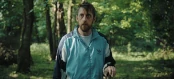
1902 colour film can now be viewed.
His name was Edward Raymond Turner and he was a man with a vision. Back in 1899 he figured out that by taking a film whose successive frames recorded different colours - red, green and blue - he could create the appearance of true colour on a cinema screen. In 1902 he took his camera into his garden and filmed his children. A few years ago, his film was discovered in the archives of Bradford's National Media Museum. Now it has been shown for the first time.
Although Turner's recording system was successful, the film it used was of a size incompatible with available projectors, so it never became a success. Colour films were already popular at the time but usually consisted of a colour wash designed to create a particular mood for a scene, as in the 1910 Frankenstein. Occasionally, frames were hand-painted to give colour to particular objects or faces. In years to come, it was discovered that the blue frames Turner used were unnecessary and true colour images could be created using just green and red, and this marked the beginning of the revolution that gave us the colour films we know today.
Sadly, Turner didn't live to see the technology develop, dying of a heart attack the year after he shot his remarkable film. The images he captured - of the children, the family goldfish and a vivid macaw - can now be viewed by visitors to the Bradford museum, where computer remasterising has worked around the projector problem and brought them to life.

 Facebook
 Reddit