



 Facebook
 Reddit
Rodrigo Duterte's presidency has come under increasing film scrutiny since he rose to power in 2016 and declared his "war on drugs" with documentaries like On The President's Orders and Aswang and fictional films including Brillante Mendoza's Alpha, The Right To Kill all highlighting the horrifying toll of extra-judicial killings, particularly on the poor.
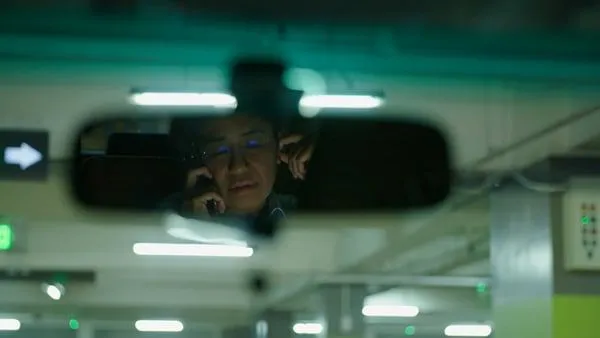
Ramona S Diaz's documentary expands outwards from the deaths themselves to look at the collateral damage that is being done to democracy by Duterte's presidency, with a particular focus on the manipulation of social media and the freedom of the press. Acting as a focal point is Maria Ressa - a Filipino-American journalist who, after a career with CNN, founded the Filipino online news source Rappler and has reaped the Duterte whirlwind as a result.
 Ressa proves to be a great choice of subject, allowing Diaz intimate access as she goes about her incredibly busy life, not just as she talks to the journalists who work at Rappler but in the few off hours she has, personal family moments that only serve to further underline how driven by work she is. She isn't just interested in interviewing Duterte and holding up what he says to the light - though we see her do just that here - she also has an interest in the disinformation networks that helped him rise to power and shore up his popularity. The film is peppered with screenshots of tweets from attack accounts, many of which threaten violence and are steeped in misogyny, while graphics show how a relatively small group of trolls can amplify one another on social media platforms (another subject increasingly popular with filmmakers and something, which, if it interests you, you can learn more about in Cambridge Analytica doc The Great Hack and The Dissident).
The "end goal is to make you doubt the facts", Ressa says - something that will sound disturbingly familiar to many people in other countries, where populism has gained as firm a foothold in politics as debate. As the film progresses, we can see how the regime wastes no time in becoming increasingly repressive, no surprise, perhaps, from a president who declares, "Violence is my strength".
Diaz offers some background detail of local elections, which show one female reformer locking horns with the misogynistic language of Duterte, while another candidate Esther “Mocha” Uson - a former singer - is firmly in his corner, helping to promote his message across the internet with her blog. In a move that holds echoes of the Marcos regime, we also see Duterte's kids firmly in the running, along with Ronald “Bato” dela Rosa - a police chief turned politician, who treats his campaign as though he's on reality TV, complete with singing. In short, there's a lot going on here and, while a tighter focus on the day-to-day running of Rappler would be welcome, this broader canvas does allow more of a feel for the fabric of the country than a narrower doc would provide. Solid editing from Leah Marino also ensures we always know where we are.
The film's broad scope also serves to further underline its title - the cuts it references aren't just being made in one place, but all over the body politic. The, sometimes chaotic, campaigning, also serves to emphasise just how remarkably calm Ressa remains, even after she finds herself in the cross-hairs of the judiciary, charged under laws that weren't even existence when the material in question was written. And the attack on her, simply for asking persistent questions and doing her job, are a cautionary tale for any country where populisr politicians seek to push their way to power with emotional rhetoric and suppression of scrutiny rather than discussion and facts.
Reviewed on: 05 Aug 2020

If you like this, try:
Review preview for Aswang
Shot mainly at night, the darkness deepens the film's oppressive quality, while the constant presence of rubbish only adds to the sense of everyone sitting in a miasma of despair.
Review preview for The Dissident
The Icarus Oscar-winner's analysis is robust and well-illustrated and he moves at a pace, even if the scoring from Adam Peters is over-insistent in places.
Review preview for On The President's Orders
James Jones and Olivier Sarbil's documentary is not the first film to explore this subject but it is remarkable in that it manages to tell the story from the point of view of police officers as well as addicts and civilian observers.