



 Facebook
 Reddit
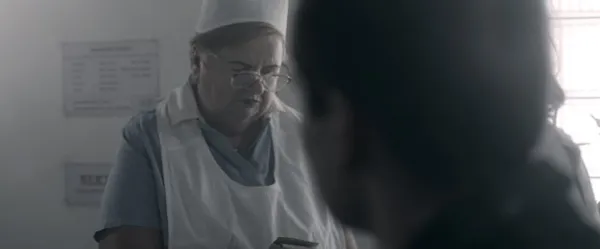
Ďalšia, the title in the original, means something like "another", "next" in the business of queues. No stranger to waiting. Czechoslovakia, 1989. The camera rolls around the reception area of a medical facility, not just the flicker of fluorescents but interruption of power. The women change at the end of a corridor, "What are you staring at?" in that cramped space.
There are rules here, that interruption of power is not just electric but bureaucratic. Sympathy is not issued, neither from the pharmacy nor the medical supplies store. The camera in Dominik György's film is never still, tight within this small space to faces and hands, the tremble of finger and lip. Our protagonist shows her ID but we will never learn her name. It matters only that she is here, and that she does not have something.
Is it one take? It might be, that finite opportunity and inherent tension are in keeping. That focus, danger close, means any number of things can be hidden in the background. The movement of the rest of our nameless cast, "Do not lean on the counter", "Sign here", "The doctor cannot see and she is bleeding", seen, unseen, humanised and inhumane.
Jack Bocpow's score skirls and swoops as much as the Gyorgy's camera, the desaturated palette combining with it all for a sense as much uneasiness as queasiness. This is the irregularly washed out green of neglected medicine, of Hippocrates become hypocrisy, the dark of dried blood in moments of red.
At the end, in a font unfriendly enough to be apt, context not previously given. Changes to how the then Czechoslovakia authorised the termination of pregnancies, 1989 the year the most abortions were recorded. Still without access to contraception, but now not moderated by 'ethics' panels who might rule on the basis of demographic ambition than anything personal to the applicant. Does it add with it at the end? More perhaps than the flickers of exposition we are already given, but they are enough in that space, the white-enamelled iron of heavy medicine.
Almost all women in the 15 some minutes, nurses, mothers, the sympathetic and the not, one husband/partner/boyfriend who cannot cope and leaves. Not a luxury afforded to the others, not in the scrabble for the requirements. No procedure without preparation, and here it can be assumed that the efforts offscreen are reflected in what we see. This is bleak, undoubtedly, but finds something to say within it. For a subject so charged this manages a form of, if not neutrality, then humanity.
Reviewed on: 11 Oct 2021

If you like this, try:
Review preview for Behaviour
A triumph, albeit an uneasy one.
Review preview for By The Time I Fall Asleep
Damian Kosowski's film is cold and claustrophobic, tight in shot and focus in the few scenes outdoors and distant and distressed even by the bath.
Review preview for Echo
It's the silences that really give Echo its power.